What Is Private Health Insurance?
Private health insurance is coverage provided by companies like UnitedHealthcare, Aetna, Cigna, and Blue Cross Blue Shield.
You can get it in two main ways:
- Through your employer
- By purchasing a plan via the Health Insurance Marketplace
How It Works
You pay:
- Monthly premium
- Deductible (before coverage starts)
- Copay or coinsurance per visit
Plans usually fall into categories:
- HMO (Health Maintenance Organization): Lower cost, limited network
- PPO (Preferred Provider Organization): Higher flexibility, higher cost
- EPO (Exclusive Provider Organization): Mid-range option
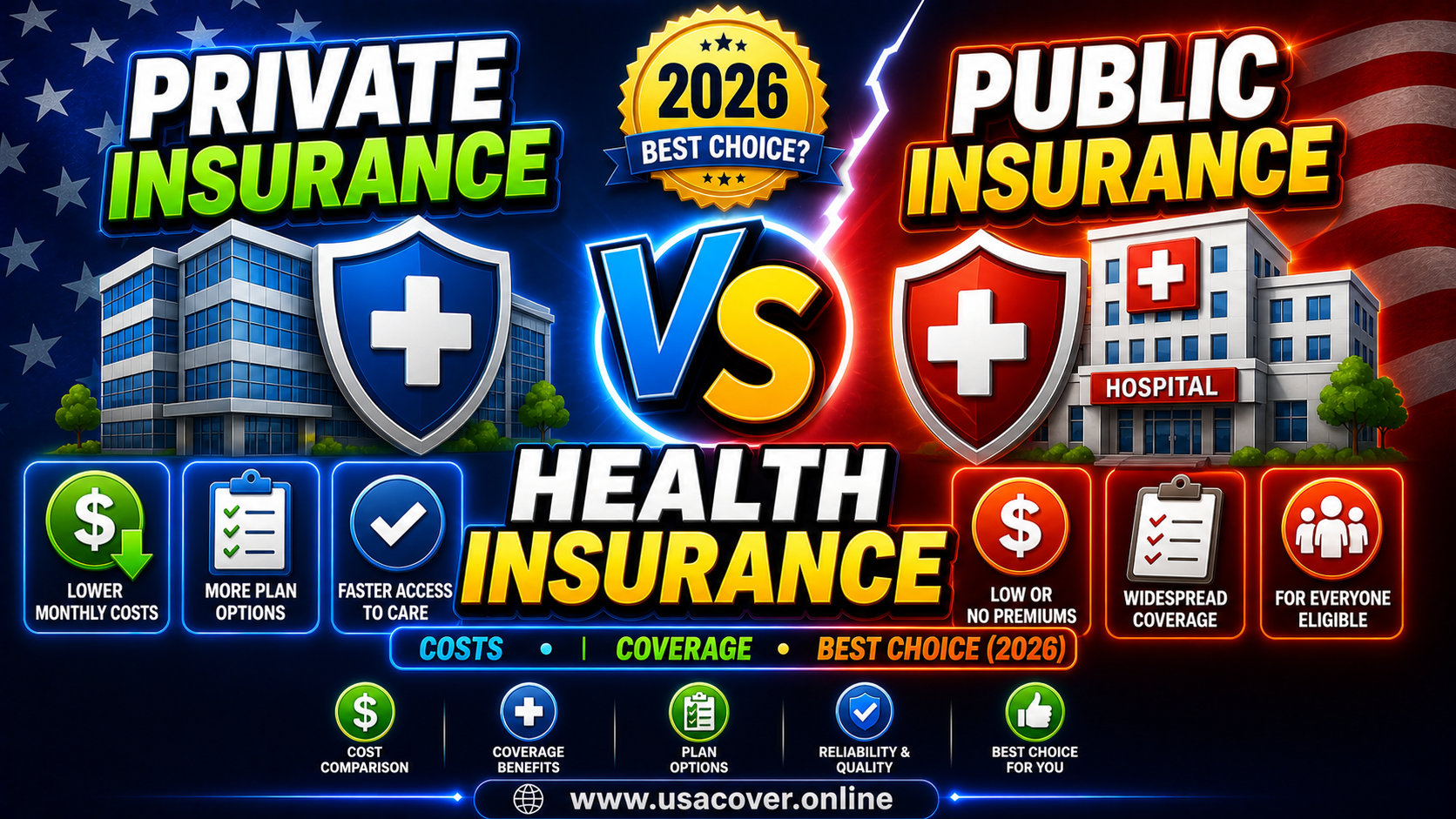
Private insurance gives you more control over providers and faster access to specialists.
What Is Public Health Insurance?
Public health insurance is funded by the government and designed to support specific groups.
Major Programs Include:
- Medicare – for people aged 65+ or with disabilities
- Medicaid – for low-income individuals and families
- Children’s Health Insurance Program – for children in eligible households
- Affordable Care Act – regulates subsidies and coverage standards
How It Works
- Funded through taxes
- Lower or no monthly premiums
- Eligibility-based enrollment
Public programs focus on affordability and essential coverage.
Key Differences: Private vs Public Health Insurance
| Feature | Private Insurance | Public Insurance |
|---|---|---|
| Provider | Private companies | Government programs |
| Cost | Higher premiums | Low or free |
| Eligibility | Open to most | Income/age-based |
| Flexibility | High | Limited |
| Network | Broad (depends on plan) | Often restricted |
| Enrollment | Fixed periods | Year-round (Medicaid) |
| Speed | Faster access | May involve wait times |
Cost Comparison: What You Can Expect
Private Insurance Costs
Typical ranges in the U.S.:
- Premium: $300–$900/month (individual)
- Deductible: $1,500–$7,000
- Out-of-pocket max: $6,000–$9,000
Employer-sponsored plans often reduce these costs significantly.
Public Insurance Costs
- Medicaid: Usually free or very low cost
- Medicare Part B: Around $170/month (income-adjusted)
- CHIP: Minimal fees
Key Insight
Private plans cost more upfront but offer flexibility. Public programs are cheaper but come with eligibility limits and sometimes narrower networks.
Eligibility Rules Explained
Who Can Get Private Insurance?
- Anyone legally residing in the U.S.
- Subsidies available based on income under the ACA
Who Qualifies for Public Insurance?
Medicare
- Age 65+
- Certain disabilities
- End-stage renal disease (ESRD)
Medicaid
- Low-income individuals and families
- Eligibility varies by state (expansion vs non-expansion states)
CHIP
- Children in families who earn too much for Medicaid but still need assistance
Pros and Cons
Private Health Insurance
Advantages:
- Wide provider choice
- Faster access to specialists
- Flexible plan options
Disadvantages:
- Expensive premiums
- High deductibles
- Complex billing systems
Public Health Insurance
Advantages:
- Affordable or free
- Covers essential healthcare needs
- Strong financial protection
Disadvantages:
- Limited provider availability in some areas
- Strict eligibility rules
- Possible wait times for services
How to Choose the Right Option (Step-by-Step)
Step 1: Check Your Income Level
- Low income → Medicaid
- Moderate income → ACA subsidies
- High income → Private plans
Step 2: Consider Employment Status
- Employer offers insurance → Compare with marketplace
- Self-employed → Marketplace plan likely best
Step 3: Evaluate Age and Health
- 65+ → Medicare
- Chronic conditions → Broader networks may be better
Step 4: Compare Total Costs (Not Just Premiums)
Look at:
- Deductible
- Copays
- Out-of-pocket maximum
Step 5: Check Provider Networks
Ensure your preferred doctors and hospitals are included.
Real-Life Scenarios
Scenario 1: Low-Income Family
A family earning below the poverty line may qualify for Medicaid, making it the most cost-effective option.
Scenario 2: Freelancer or Self-Employed Worker
Marketplace plans with subsidies can significantly reduce premium costs.
Scenario 3: Retired Individual
Medicare combined with supplemental insurance offers balanced coverage.
Scenario 4: Small Business Owner
Offering employer-sponsored private insurance can attract employees but comes with higher costs.
State-Level Differences That Matter
Healthcare access isn’t the same across the U.S.
Medicaid Expansion States
- Broader eligibility
- More people qualify
Non-Expansion States (e.g., Texas, Florida)
- Stricter income thresholds
- Fewer people eligible
What This Means
Where you live affects:
- Eligibility
- Costs
- Available providers
Common Mistakes to Avoid
- Choosing the cheapest premium without reviewing deductibles
- Ignoring provider network restrictions
- Missing enrollment deadlines
- Not checking eligibility for subsidies or Medicaid
- Overlooking out-of-pocket maximums
Alternatives Worth Considering
If neither private nor public insurance fits your situation, consider:
- Short-term health insurance
- Catastrophic plans (for emergencies only)
- Health sharing programs
- Employer reimbursement arrangements (HRAs)
These options can help bridge coverage gaps but may not offer full protection.
Practical Tips for Better Coverage
- Always compare at least 3 plans
- Use subsidy calculators before choosing
- Review coverage annually
- Understand what is not covered
- Prioritize total yearly cost over monthly premium
Frequently Asked Questions
1. Is private health insurance better than public?
It depends on your needs. Private offers flexibility and faster access, while public provides affordability and essential coverage.
2. Is public health insurance free in the U.S.?
Programs like Medicaid are often free or very low-cost, depending on income and state rules.
3. Can I have both Medicare and private insurance?
Yes. Many people use supplemental private plans alongside Medicare.
4. What is the biggest difference between public and private insurance?
Private insurance is company-based and flexible, while public insurance is government-funded and eligibility-based.
5. Which option is cheaper?
Public insurance is generally cheaper, especially for low-income individuals.
6. Can I switch between private and public insurance?
Yes, if your eligibility changes or during enrollment periods.
7. What happens if I don’t have health insurance?
You may face high medical bills and limited access to care. Some states may also impose penalties.
8. Are ACA plans considered private or public?
They are private plans regulated by the government under the ACA.
Conclusion
Private and public health insurance in the U.S. serve different purposes, and neither is universally better. The right choice depends on your income, age, employment status, and healthcare needs.
If affordability is your priority, public programs like Medicaid or Medicare may be ideal. If flexibility and provider choice matter more, private insurance is often the better fit.
Take time to compare your options carefully. Evaluate total costs, not just premiums, and ensure your preferred providers are included. A well-informed decision today can save you thousands of dollars and provide peace of mind in the future.