🛡️ What Is Liability Insurance?
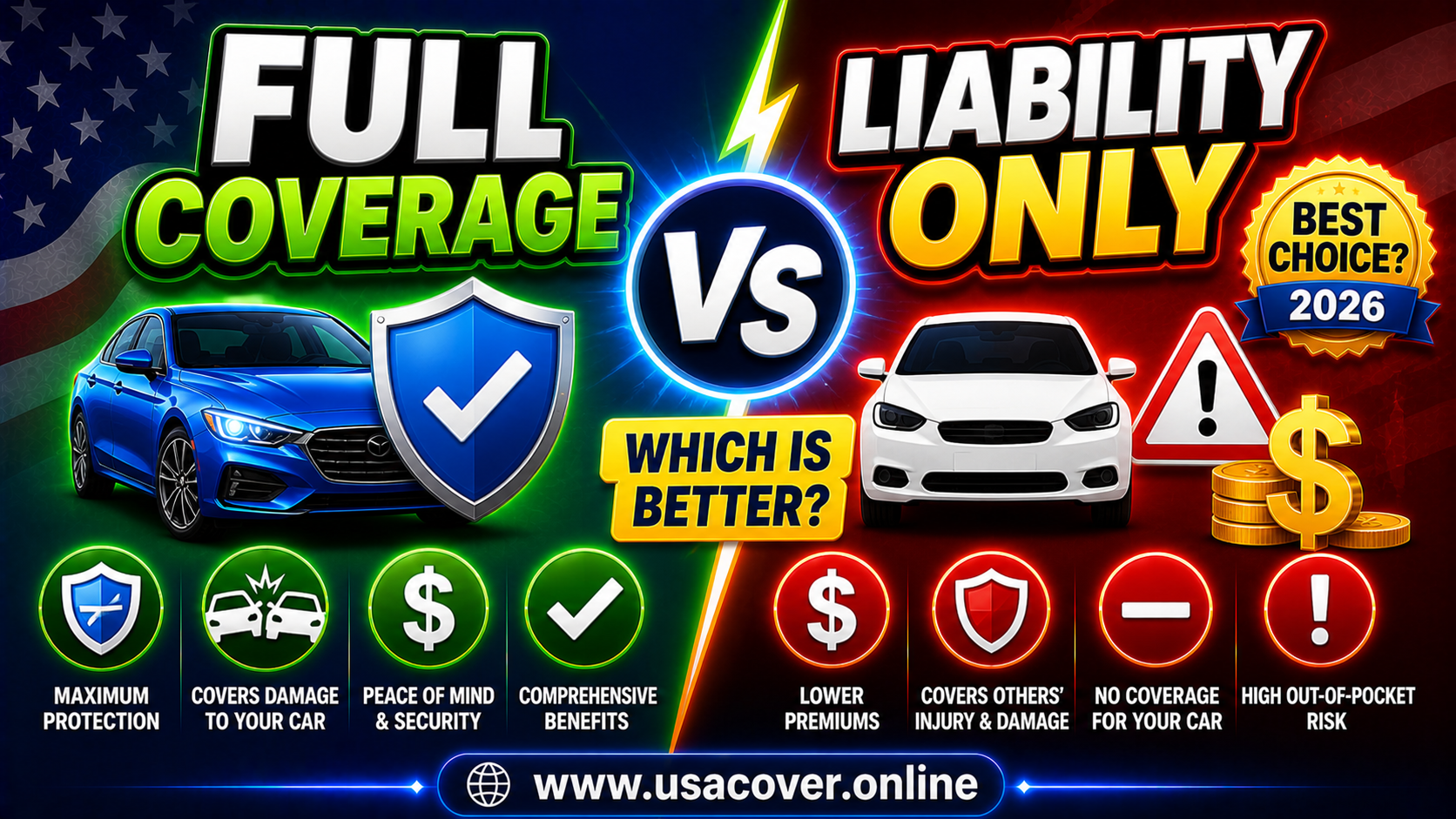
Liability insurance is the minimum coverage required by law in most U.S. states. It protects other people—not you—if you cause an accident.
What liability insurance covers:
- Damage to another person’s vehicle
- Property damage (buildings, fences, etc.)
- Medical expenses for others
What it does NOT cover:
- Repairs to your own car
- Theft or vandalism
- Weather damage
This makes liability insurance the cheapest option, but also the riskiest.
🚘 What Is Full Coverage Insurance?
Full coverage is a combination of multiple protections bundled together. It usually includes:
- Liability insurance
- Collision coverage
- Comprehensive coverage
Major insurers like GEICO, Progressive, State Farm, and Allstate offer customizable full coverage plans.
What full coverage protects:
- Your car after accidents
- Theft, fire, natural disasters
- Damage from uninsured drivers
It offers broader protection—but at a higher cost.
⚖️ Key Differences Between Full Coverage and Liability
| Feature | Liability Insurance | Full Coverage |
|---|---|---|
| Covers other people | ✅ Yes | ✅ Yes |
| Covers your car | ❌ No | ✅ Yes |
| Theft & disasters | ❌ No | ✅ Yes |
| Monthly cost | Low | Higher |
| Legal requirement | Yes | No |
💵 Cost Comparison in the USA
Insurance costs vary depending on location, driving history, and vehicle type.
| Coverage Type | Monthly Cost Range |
|---|---|
| Liability Only | $40 – $80 |
| Full Coverage | $120 – $250 |
Location matters:
- California & Florida → higher premiums
- Texas → moderate rates
- Ohio → lower costs
These differences show why comparing options regularly is essential.
🧠 When Liability Insurance Makes Sense
Liability-only coverage is often the better choice when:
- Your car is old or low in value
- Repair costs would exceed the car’s worth
- You want the lowest possible monthly payment
Example:
If your car is worth $3,000, paying for full coverage may not be financially smart.
🚀 When Full Coverage Is the Better Option
Full coverage is ideal if:
- Your car is new or expensive
- You have a loan or lease
- You cannot afford large repair costs
Example:
A $25,000 vehicle benefits from full coverage because repair or replacement costs are high.
📊 Decision Framework: Which One Should You Choose?
Use this quick guide:
Choose Liability If:
- You want the cheapest insurance
- Your car value is low
- You’re comfortable with higher risk
Choose Full Coverage If:
- Your car is valuable
- You want maximum protection
- You rely heavily on your vehicle
🔍 Real-Life Scenarios
Scenario 1: Budget Driver in Texas
A driver with an older sedan chooses liability insurance to minimize costs.
Scenario 2: Family in California
A family with a new SUV selects full coverage for complete protection.
Scenario 3: Retired Driver in Ohio
A retiree with a low-value vehicle switches to liability to save money.
⚠️ Common Mistakes Drivers Make
- Keeping full coverage on a very old car
- Choosing liability just to save money without understanding risk
- Ignoring deductibles when comparing plans
- Not reviewing insurance annually
Avoiding these mistakes can save hundreds of dollars each year.
💡 Expert Tips to Save Money
- Increase your deductible to lower premiums
- Maintain a clean driving record
- Bundle policies for discounts
- Compare quotes every 6–12 months
- Re-evaluate coverage as your car ages
⚖️ Pros and Cons
✔ Liability Insurance
Pros:
- Lowest cost
- Meets legal requirements
Cons:
- No protection for your vehicle
- Higher out-of-pocket risk
✔ Full Coverage Insurance
Pros:
- Complete protection
- Covers most risks
Cons:
- Higher monthly cost
- May not be worth it for older cars
🌍 State-Level Factors in the USA
Insurance laws and pricing vary by state.
Key considerations:
- Minimum coverage requirements differ
- Weather risks (Florida storms, California wildfires)
- Traffic density affects premiums
Searches like “cheap liability insurance near me” or “full coverage cost in Texas” highlight how local factors influence decisions.
🔄 When Should You Switch Coverage?
You should consider switching from full coverage to liability when:
- Your car value drops below $4,000–$5,000
- Insurance cost exceeds 10% of car value annually
- You can afford to replace the car yourself
🔧 Alternatives to Consider
- Usage-based insurance (pay-per-mile)
- High-deductible full coverage
- Hybrid policies with limited collision
These options can balance cost and protection.
❓ Frequently Asked Questions (FAQs)
1. Is full coverage better than liability insurance?
Full coverage offers more protection, while liability is cheaper. The better option depends on your vehicle and financial situation.
2. Can I switch from full coverage to liability anytime?
Yes, most insurance providers allow you to switch at any time.
3. Is full coverage required by law?
No, only liability insurance is legally required in most states.
4. What does liability insurance not cover?
It does not cover your own car, theft, or natural disasters.
5. How much does full coverage cost?
Typically between $120 and $250 per month, depending on various factors.
6. When should I drop full coverage?
When your car’s value is low and coverage costs are no longer worth it.
7. Which insurance is cheapest?
Liability insurance is significantly cheaper than full coverage.
8. Do lenders require full coverage?
Yes, most lenders require full coverage for financed or leased vehicles.
🏁 Conclusion
The choice between full coverage and liability insurance comes down to balancing cost with protection.
If your car is valuable or financed, full coverage provides peace of mind and financial security. If your car is older and less valuable, liability insurance can help you save money.
✔ Action Steps:
- Check your car’s current value
- Compare quotes from multiple insurers
- Match coverage to your financial risk
- Review your policy every year
Making the right decision today can protect both your vehicle and your wallet for years to come.